Sleepy Brain Night Clipart: Whimsical Graphics & Illustrations
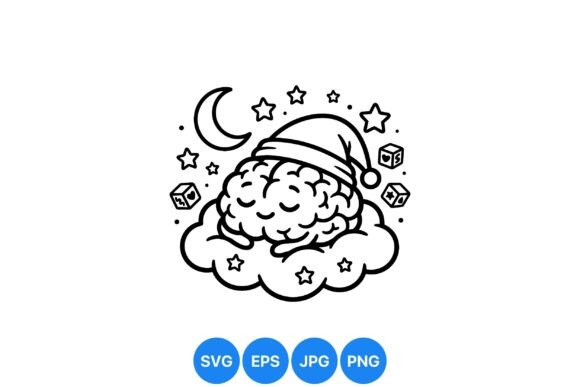
As a brand designer who’s developed visual identities for over 40 local businesses—from artisan candle studios and organic skincare boutiques to neighborhood bakeries and children’s book publishers—I opened the Sleepy Brain Night Clipart ZIP file expecting charm, but what stood out immediately was its intentional calm. A sleepy brain character with closed eyes, gently cradled in a nightcap, floating on a soft cloud amid stars, a crescent moon, and subtle decorative cubes—rendered in clean black line art. It doesn’t shout. It breathes. That distinction matters deeply when you’re designing for real small business branding where emotional resonance drives recognition and loyalty.
A Mood That Builds Trust Before the First Word Is Read
This isn’t playful chaos or cartoonish energy—it’s calm whimsy. The line weight is consistent and confident, the composition balanced yet tender. It suggests rest, gentle ritual, and mindful pause—perfect for brands rooted in self-care, bedtime routines, wellness, or nostalgic comfort. I recently used it as a key decorative element for a local handmade soap brand launching a “Midnight Lavender” line. Customers told us the packaging felt “like a lullaby in visual form”—a rare compliment that speaks directly to how well Sleepy Brain Night Clipart supports emotional storytelling without sacrificing polish.
Where This Graphic Design Asset Earns Its Place
In practical local business use, Sleepy Brain Night Clipart shines brightest where personality meets function:
- Product labels: Works beautifully as a secondary icon beside ingredient lists or scent notes—especially on apothecary-style jars, tea tins, or bath salt bags.
- Packaging accents: Add it to the bottom corner of kraft boxes, belly bands, or sticker seals for boutique-level refinement.
- Thank-you cards & hang tags: Its black-line simplicity ensures crisp printing at small sizes (down to 0.75”) without blurring or loss of detail.
- Social media graphics: Layer it over soft gradients or muted backgrounds for Instagram Story banners, Reels thumbnails, or email newsletter headers—ideal for promoting seasonal campaigns like “Cozy Season Launch” or “Holiday Slumber Kits.”
- Printable inserts: Include it in downloadable bedtime routines or wellness checklists sold as digital products—its SVG and high-res PNG files scale flawlessly across formats.
Real Impact on Business Presentation
When applied thoughtfully, this illustration strengthens multiple pillars of professional branding. It improves first impression by signaling intentionality—not just decoration, but meaning. It boosts product recognition on crowded shelves or Etsy listings because its silhouette is distinct yet soothing. It supports visual hierarchy by acting as a breathing point amid text-heavy labels. Most importantly, it deepens emotional connection: customers associate the gentle brain motif with safety, rest, and care—qualities that elevate perceived value and justify premium pricing for handmade or locally made goods.
Where to Use It With Care
Like any strong graphic design asset, Sleepy Brain Night Clipart has boundaries. Avoid using it in contexts where clarity, authority, or minimalism are non-negotiable:
- Formal corporate branding: It’s not suited for law firms, financial advisors, or B2B tech startups.
- Ingredient-dense product labels: Don’t place it where it competes with allergen statements or regulatory text.
- Small-format packaging: Test it at actual print size—some fine details (like cube edges or star points) may soften below 0.5” unless vector paths are optimized.
- Luxury minimalist brands: If your aesthetic relies on stark negative space and monochrome typography, this illustration may feel too narrative.
- Low-contrast backgrounds: Its black line art needs sufficient contrast—avoid placing it over dark grays or busy textures without a subtle white stroke or drop shadow.
Practical Brand Designer Notes You Can’t Skip
Before locking it into your client’s brand identity or product mockup, run these checks:
- Test it on real packaging mockups—not just screen previews—in both natural and retail lighting.
- Check black-and-white usage: Does it retain charm when printed on uncoated kraft paper? Yes—but confirm ink coverage isn’t too heavy.
- Preview it on small labels: Zoom in at 100% in Illustrator or InDesign to spot any stray anchor points or inconsistent strokes.
- Test it with your brand colors: Try pairing it with warm neutrals, dusty blues, or muted lavenders—not just black/white.
- Compare it against competitor packaging: Does it stand out without feeling alien to category expectations?
- Verify print quality: Open the SVG in a vector editor—check if paths are smooth and grouped logically for easy recoloring.
- Review PNG transparency: The included PNGs have clean alpha channels—ideal for Canva templates or web design integration.
- Test it beside font pairings: It harmonizes with serif (e.g., Playfair Display), sans serif (e.g., Montserrat), and even delicate script fonts—but avoid overly bold display fonts that visually overwhelm its quiet tone.
- Confirm commercial license: Ensure redistribution rights cover physical product sales, not just digital use—critical for handmade business owners.
For small business branding, every graphic design asset must pull double duty: communicate meaning *and* uphold professionalism. Sleepy Brain Night Clipart does both—not as filler, but as quiet punctuation in a thoughtful brand story. Whether you're designing sleep-themed candles, lavender-infused cookies, or printable bedtime journals, this illustration brings cohesion, warmth, and unmistakable local charm to your marketing visuals, packaging design, and customer experience—without ever saying a word.